
Introduction
Today, I’ll introduce the Engineering Product Life Cycle Management (LCM) structure that I plan to adopt for my future projects.
What is LCM
LCM is a comprehensive framework that integrates engineering, project management, finance, and manufacturing to ensure the robust development of products. While I won’t delve deeply into LCM due to its complexity, I encourage further exploration through various resources available online.
An Example of Engineering LCM
One exemplary resource is NASA’s Systems Engineering Handbook, which details the agency’s approach to project management and LCM adaptation for different tasks. I highly recommend this handbook to engineers and students alike for its invaluable insights into NASA’s LCM methodologies. Below are some images from the handbook, illustrating their thought processes regarding LCM:
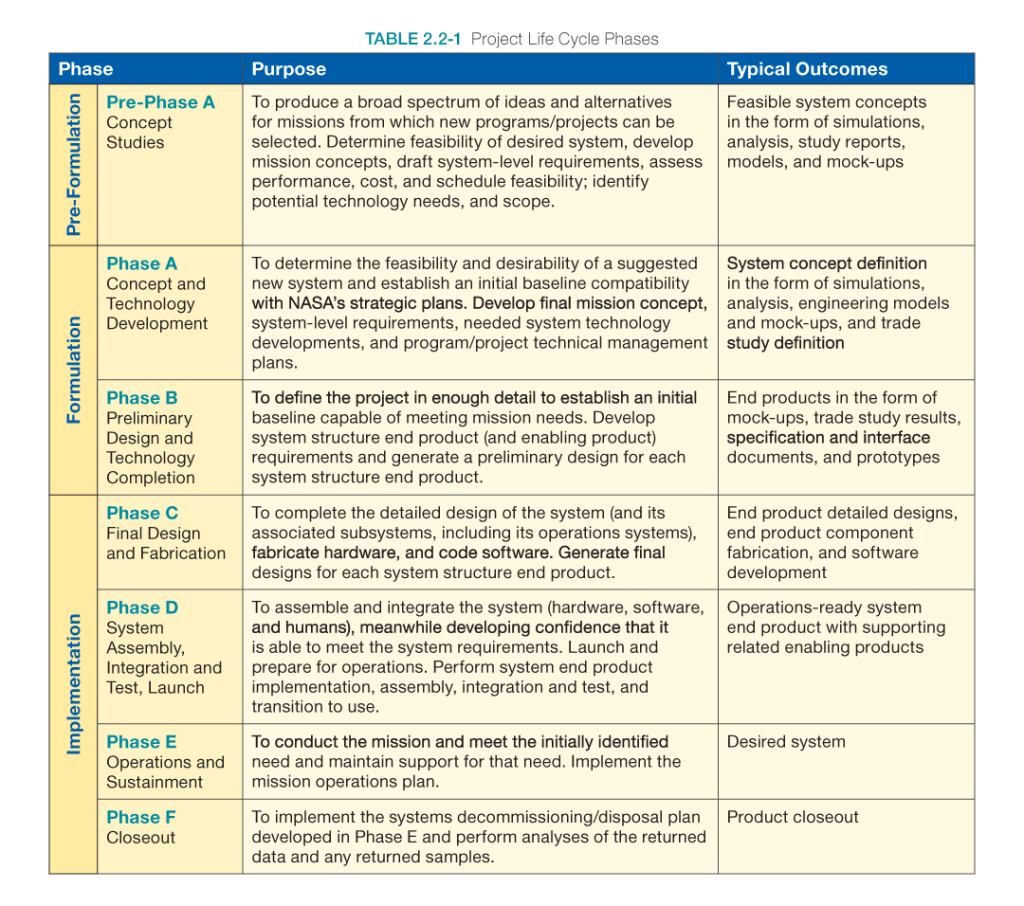

For a comprehensive understanding, I strongly advise consulting the NASA Handbook directly. Link
Why I will be using LCM
My adoption of LCM is driven by the belief that it will enhance product development, ensuring robust design at every stage. Although operating as a one man team presents challenges, the structured reviews within LCM aim to minimise oversight and maximise product integrity.
Throughout this project, I will clearly highlight my current phase within the lifecycle in each post, ensuring to specifically indicate when a post serves as a “Design Review”.
My General Approach
Below is an outline of the LCM process adapted for my personal use, demonstrating a streamlined approach compared to industrial standards:
| Phase | Description | Expected Outcomes |
| 0 | Planning | User Requirements and Mission statement Research Plans in place for how the project is to be run |
| 1 | Understanding the task | Understood user requirements and Objectives. Level 1 System Requirements generated |
| 2 | Concept Creation | System Architecture created Level 2 Sub-System Requirements generated Concept selected |
| 3 | Design Development | Final Design Completed |
| 4 | System Integration Testing | Full system testing completed and product is working as per specs |
| 5 | Manufacturing | Product/s assembled |
| 6 | Delivery and Acceptance | Product delivered to customer and/or user |
| 7 | Product Support | Supporting product through its life |
| 8 | Disposal | Decomissioning |
This tailored LCM framework is designed to be more efficient for individual projects, focusing on rapid transition to engineering work without the extensive resources typically required in larger industry settings.
This LCM framework will be adapted as required for each project in the future.
Conclusion
The LCM process is crucial in modern engineering, guiding us towards delivering functional products while also considering their lifecycle end. Regular phase reviews within this framework facilitate early risk identification and mitigation, ensuring projects remain on track and within budget. I’ll share updates and “Design Reviews” as I navigate through the LCM phases, continuously refining my approach based on practical learnings.
 T.W. Projects
Leave a comment